Product Description
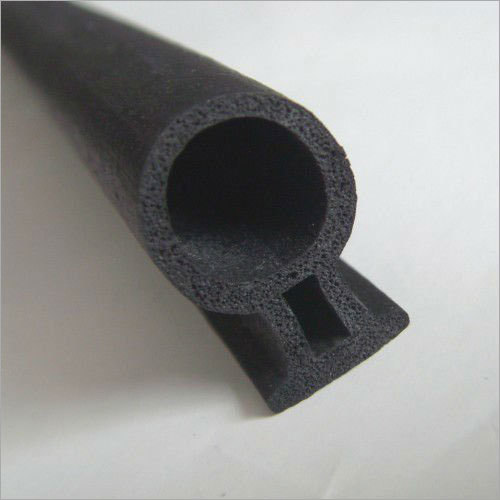
EPDM Rubber Sponge Profile
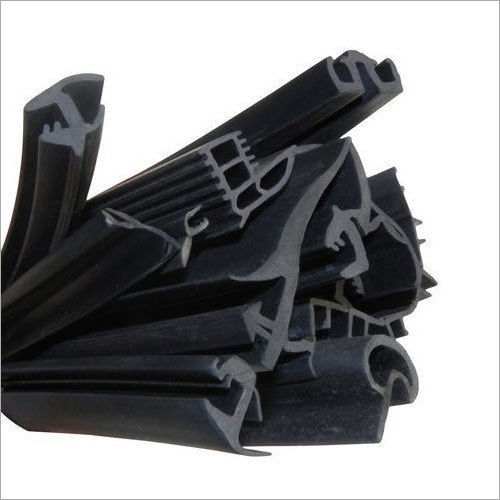
Backed by a team of diligent professionals, we are engrossed in supplying the top-of-the-line EPDM Rubber Sponge Profile that is unmatched in terms of design and quality. It is made in our state-of-the-art production site making the best use of pioneering in-house tools and techniques. It is a durable and resilient product. EPDM Rubber Sponge Profile is used typically to create a perfect seal between the metal and glass sections. Sponge Profile is used in the automobile industry. Our customers can get this extruded profile at a reasonable price.
Product details
|
Temperature Range
|
-40 to 120 Degree C
|
|
Brand
|
Saga
|
|
Hardness
|
10 to 35 shore A
|
|
Material
|
EPDM Rubber
|
|
Country of Origin
|
Made in India
|
Exceptional Durability & VersatilityEPDM Rubber Sponge Profiles deliver outstanding performance against UV rays, ozone, and severe weather, making them ideal for both indoor and outdoor sealing and insulating applications. Their moderate tear resistance and non-conductivity ensure safety and longevity across various industries, including automotive and construction. With a self-extinguishing flame-resistant option and low water absorption, they provide robust protection against environmental factors.
Customizable for Diverse NeedsThese rubber profiles come in a range of standard and customized sizes, shapes, and colors, allowing precise matching to project requirements. Whether you need extruded, hollow, or solid profiles, each is engineered to meet international and automotive standards. The profiles are available in coils or bundles, with push-fit, adhesive, or mechanical installation methods to simplify on-site application.
FAQ's of EPDM Rubber Sponge Profile:
Q: How are EPDM Rubber Sponge Profiles typically installed?
A: EPDM Rubber Sponge Profiles offer versatile installation options including push-fit, adhesive bonding, or mechanical fixing. This flexibility allows them to be easily fitted into frames, gaps, or surfaces depending on your application, whether in automobile doors or construction joints.
Q: What benefits do EPDM Rubber Sponge Profiles provide in outdoor or automotive applications?
A: Thanks to their exceptional resistance to UV, ozone, weather, and aging, these profiles excel in outdoor and automotive environments. They help prevent water, dust, and air ingress, ensuring effective insulation and long-term durability even in harsh conditions.
Q: When should EPDM Rubber Sponge Profiles be replaced?
A: Under proper storage conditions, these profiles have a shelf life of up to 5 years. However, actual service life may vary based on exposure to environmental stressors. Replace them if there are signs of cracking, hardening, or loss of flexibility to maintain effective sealing.
Q: Where can these rubber sponge profiles be used?
A: They are suitable for a vast range of applications, including window and door seals, automotive gaskets, insulation strips, weatherproof covers, and construction expansion joints. Their customizable sizes and shapes make them a fit for both standard and specialized uses.
Q: What customization options are available for EPDM Rubber Sponge Profiles?
A: Profiles can be tailored in terms of width, thickness, hardness (10-35 shore A), length (up to 50 meters), color, shape (extruded, hollow, or solid), and even packaging, allowing for precise adaptation to unique project specifications or branding requirements.
Q: How is the product ensured to meet safety and quality standards?
A: These profiles conform to international and automotive application standards, are RoHS compliant, and can be supplied with self-extinguishing grades for enhanced flame resistance. Rigorous testing for compression set, elongation, and tensile strength guarantees consistent quality.
Q: What is the manufacturing process of EPDM Rubber Sponge Profiles?
A: Manufactured through advanced extrusion techniques, EPDM rubber is processed into sponge profiles with smooth, matte surfaces. The process allows precise control over density, hardness, and tolerance (0.5 mm), meeting stringent industry requirements for sealing and insulation products.
 08045812008
 English
 Spanish
 French
 German
 Italian
 Chinese (Simplified)
 Japanese
 Korean
 Arabic
 Portuguese








 Send Inquiry
 Send Inquiry
 Send SMS
 Call Me Free