Product Description
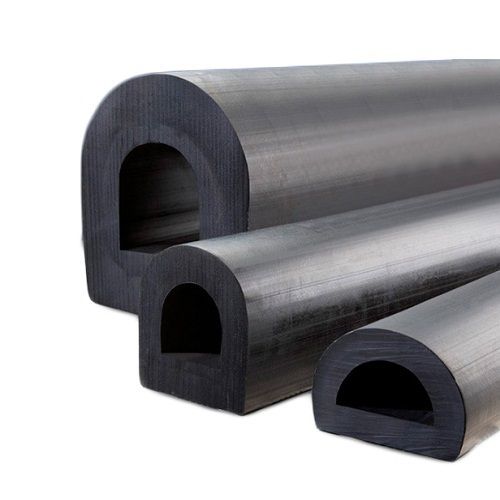
EPDM Rubber Fenders can be utilized at loading inlets for trucks and lorries. This is suited for many unique applications wherein the protective barrier is essential. The offered fenders are highly resistant to UV radiation, seawater, distortion, degradation, and other environmental factors. EPDM Rubber Fender are the long lasting and sturdy fenders, which can stand the test of time. Their installation is possible in a horizontal, diagonal and vertical way. These are highly practical as well as versatile solutions for industries.
Product details
|
Thickness
|
15 mm
|
|
Brand
|
Saga
|
|
Hardness
|
30 - 90 Shore A
|
|
Material
|
EPDM Rubber
|
|
Color
|
Black
|
Comprehensive Marine ProtectionDesigned to protect jetties, quay walls, and vessels from impact damage, EPDM Rubber Fenders excel in marine environments with their impressive resistance to aging, ozone, and harsh weather. Their high elongation and compression set ensure shock absorption and longevity, making them a reliable choice for prolonged exposure to the elements.
Customizable Profiles & Easy InstallationAvailable in standard or custom profiles (D-shaped, cylindrical, square), widths, and lengths, these fenders satisfy varied project requirements. Installation is convenient and versatile, with mounting options such as bolting, recessing, or chaining to structures, ensuring secure and adaptable fitment for diverse marine setups.
Environmentally Friendly & DurableManufactured using recyclable EPDM rubber, these fenders combine eco-consciousness with long-lasting performance. Their smooth, non-porous surface offers low water absorption and excellent resistance to abrasion and chemicals, supporting sustainable solutions in demanding maritime conditions.
FAQ's of EPDM Rubber Fender:
Q: How is the Shore Hardness of EPDM Rubber Fenders adjusted to project requirements?
A: The Shore Hardness of EPDM Rubber Fenders can be tailored within the 30 - 90 Shore A range during manufacturing. By modifying the rubber compound and processing parameters, the fender's hardness can be matched to specific applications, ranging from softer for greater flexibility to harder for increased wear resistance.
Q: What installation methods are available for EPDM Rubber Fenders?
A: EPDM Rubber Fenders can be installed using bolted, recessed, or chained methods, determined by the design and structural requirements of the docking facility. Each method provides secure attachment and effective performance based on the specific application scenario.
Q: When should EPDM Rubber Fenders be used over traditional rubber fenders?
A: EPDM Rubber Fenders are ideal when superior resistance to ozone, UV, and weathering is required. They outperform natural and SBR rubber grades, especially in harsh marine environments or locations with high sun and salt exposure, ensuring longer service life and reduced maintenance.
Q: Where are EPDM Rubber Fenders most commonly used?
A: These fenders are predominantly employed in marine applications such as docks, quay walls, jetties, and alongside vessels to absorb impact energy. Their use extends to any location where durable, weather-resistant impact protection is essential.
Q: What is the manufacturing process for EPDM Rubber Fenders?
A: EPDM Rubber Fenders are manufactured either by extrusion or compression molding processes. The technique used depends on the fender's shape and size requirements, ensuring the finished product meets exacting tolerances and performance characteristics as specified.
Q: How does EPDM Rubber Fender usage benefit marine operations?
A: Utilizing EPDM Rubber Fenders provides reliable shock absorption, minimizes structural damages, and ensures long-term protection for marine infrastructures. Their outstanding resistance to environmental stressors results in lower replacement frequency and life cycle costs.
Q: What options are available for customizing EPDM Rubber Fenders?
A: EPDM fenders can be custom-made in terms of length, thickness, width, diameter, cross-sectional profile, and even hardness level. Clients can specify features to match unique project demands, ensuring optimal fit and functionality for any docking or berthing scenario.
 08045812008
 English
 Spanish
 French
 German
 Italian
 Chinese (Simplified)
 Japanese
 Korean
 Arabic
 Portuguese







 Send Inquiry
 Send Inquiry
 Send SMS
 Call Me Free